Tag Archives: GYO

To talk tomatoes #gdnbloggers

It’s okay, I am not thinking about sowing them; it is still too early, and I am inclined to wait at least another four weeks before I start sorting out runners and riders. Even then, I will be thinking about tomatoes and their sixth cousin, the aubergine. For now, I am thinking and reflecting on what might be whilst taking stock of what has already been experienced on the plot.

In 20 16, thirty two plants made it passed the initial seed and germination stage. Think these were sown in late february-most likely started off in the heated prop-as by March, the seedlings had already sent out their baby seed leaves and were about to send out their frilly first true leaves. These were then pampered and kept safe at home on a window sill so that the might establish and be sufficiently robust enough to be planted out. As you can see, we had a fair bit of fruit. Trouble is, very few turned red on the vine. In addition, there were fairly early blight warnings that led to plants being stripped of fruit and cast aside before it struck. Blight struck tomatoes are not particularly pleasant to look at; a putrid shade of puce and stomach turning. This has meant that much of the crop is ripened at home, somewhere warm and light. Ripening does happen eventually, it just takes some time to get going.

You’d think a red tomato was a red tomato. On the contrary, there are  many different varieties, each with their own unique qualities that determine productivity, attractiveness to the taste buds and what you might eventually do with the end product. Not all tomatoes are red, and I have sown and grown some rather nice yellow ones as well. Also, you get the odd ugly one that is really quite amusing. Doesn’t look particularly attractive, but that does nothing to hamper the taste. Food becomes that more interesting when it’s not perfect, but beautifully ugly. You can still eat it after all, there is no supermarket or political mandate as to how your fruit and veg might look. Wonky, uglu fruit and veg is something to shout about and not to be dismissed. (Trust me, I once wondered why I had curly beans; turns out they were never straight to begin with.)

The very first variety that ever tried was a cherry tomato called ‘Minibel’ and that was a fairly simple, straight forward introduction to growing tomatoes. Since then, I have decided to experiment and sown quite a few different varieties. Such as:

  • Latah
  • Money maker
  • Gardeners delight
  • Cream sausage
  • Tigerella
  • Marmade
  • Aisla Craig
  • black cherry
  • Yellow Stuffer
  • Brandywine
  • Shirley.

And those are the ones that I can remember, there is probably a list somewhere. These have been used in salads, Indian dishes; I even made a sage and tomato soup that was rather nice. I am still a little curious about beefsteak varieties though; I rather like marmande with it’s tendency to be sizeable with rather intriguing green shoulders. Brandywine tomatoes are something that I might look into a little further; these take time and with mega-bloom like flowers the development of fruit is somewhat delayed; that or I like something of a quick response when it comes to tomatoes. I have definitely noted the lower yield with these as well; it is much lower than other varieties and I suspect this is why I haven’t made many sowings in recent years.

It would be entirely odd to not have tomatoes on the allotment. I tend to transplant them into raised beds, occasionally they might get plugged into the open ground. I do find however, that productivity is somewhat hampered with the clay, so raised beds are a safer, more equitable bet. I did try transplanting into the poly tunnel; alas, that was a learning curve. We had triffids, yes, but not many tomato fruit. So back we went outside with all subsequent tomato growing.

As mentioned above, there are no plans to sow any tomatoes yet. The heated prop is currently full, and I am going to wait a short while. This allows me to have a look at the tomato seeds and see which ones are going to be sown. Marmade may well feature, but I also fancy trying Roma VF alongside.  I have not sown and grown this variety before, and a request was made by a sibling that we could try a plum variety.

We can talk tomatoes, but we’re not sowing them just yet.

Chateau Petal…or Petal Plonk…#gdnbloggers

Yeah, Petal Plonk doesn’t sound that good, now does it?


Not every thing on the allotment ends up being cooked. There is after all, more than one way to preserve something that has been sow and grown for the future.

2016 involved Petal and I carrying out a number of home brew experiments. Whilst there was a lighter than expected vegetable yield, there was quite a bit of soft fruit. Quite a few blackberries were harvested, and there was something of a bumper crop of currants. We also had a fair few strawberries; which since I don’t really like that much were going into ice cream, be used to make wine or be given away. I decided to go with the home brew by way of experiment.

Strawberry wine was the first of the home brew endeavours; the batch where I learned and saw what the fuss was all about. Al the subsequent batches were about replication and seeing if the straight forward recipe given to be my the fabulous Sister Sparrow could be replicated and to what effect. Problem is, I had little patience during this year; a great many things were done in a rush and probably not thought through. In relation to the home brew-strawberries in particular-I may have racked and bottled a little early. Though I have heard whispers of it being best drunk and consumed whilst young.

With the racking, especially the early stages, I learned to be firm with the must. Not let it all through, basically. Okay so the the odd blackberry or raspberry might plop through, but to generally let all the liquid pass through. With the bulkiness of the must now removed, that leaves the likelihood of sediment passing through, that’s the super fine stuff that even a muslin will let through. It is repeated racking and uber filtration that will overcome that. However, I am not aiming to supply the world’s someliers or open a vintners; I can deal with the sediment, with the wine being drunk from the top. Just don’t shake it all too much!

Today was about racking and bottling; it was the two batches of blackberry that would be dealt with today, leaving a demi-john of rhubarb and gooseberry waiting in the wings. The one batch, was from August 2016 and contained blackberries, plum and currants. This was to be bottled. You can see it above; it is a little cloud-that sediment-but hopefully should settle down. The strawberry wine did-the one in the glass-and it didn’t taste too bad either. Drinking it, was alot like eating a Sara Lee strawberry cheese cake with biscuit base. I kid you not, it was the biscuit base taste that got me. Any way, the batch is now bottled, will be labelled and stowed for future consumption. To keep the colour, I will probably wrap the bottles in brown paper. I was pleasantly surprised by the number of bottles, actually; I was only expecting six 500-ml bottles to be filled. I must think of an interesting name to put on the bottles in the same vein that all the preserves have names. Answers on a postcard, eh?

The other batch, was very very recent; blackberry wine that is dated December 2016. This has been fermented, left to settle and now been racked off-as it were. Any sediment and must that crept in has been discarded and with the wine in demi-johns, it also needs to be stowed away. This is the biggest batch by far, and I have no idea as to how many 500-ml bottles this might produce when it is eventually put into bottles. The colour is rather cool and it looks very claret-y.

As to whether it all tastes any good. Well, we’ll see!

Hello 2017! #Gdnbloggers

Hello, 2017, it is nice to meet you. I’ve been waiting for you to arrive with the hope that I might reclaim my allotmenteering mojo and once more feel the fresh dirt beneath my finger nails. With keen anticipation and lots of hope, I decided to sow chillies today. It is still far too early to sow other things, yet the sowing of chillies heralds a new start and a new growing season. Truth be told, I have very few plans beyond this session of sowing. My seedbox needs an overhaul, I don’t think I have bought seeds ‘properly’ and for a while. I will be looking through the seed box, to see what I can dispatch by way of being too old to be viable and what it is that I might bolster my seed box with. Naturally, this means searching through pages of seed catalogues. I do have a stash, Mum rather like to coo over the pictures and window shop. This years tomato and aubergines are the next to be considered, with Roma VF tomatoes like to fill out the line up in another thinned out parade.

But anyway, New Year!

chilliestosow

I had a rifle through the seed box, to see what chillies I might like to grow. I have grown lots of different varieties over the years; some have been really successful, others less so. This year, I have rather scaled back the varieties. There  are still five varieties being sown, but I am choosing not to go over board and complicate things when I want to keep things straightforward and productive.

Error
This video doesn’t exist

You can also view the video here.

(Is that video any good? I did try to make myself look a little more presentable…)

The varieties sown are:

  • Jalapeno
  • Scotch bonnet yellow
  • Purple Haze
  • Cayenne Chilli
  • Nigel’s Outdoor chilli.

As you can see, the list is shorter-much-shorter than it has has been in previous years. However, I have sown at least nine of each variety, and there is always a bit of a steep incline as to which ones actually germinate. It is still very early, and I don’t use grow lights to accelerate plant growth. This lends itself to a fair bit of risk, and the possibility that the seeds will rot, germinate get leggy and then keel over. The seeds were sown into moist jiffy pellets, which in turn are now in the heated propagator. When the seedcase has cracked, the seedling germinated, I will then fish out and pamper the little darling with the aim that it doesn’t keel over and cease to exist. You’d be surprised how well looked after these things become.

Sowing chillies was only part of the plan today; the other thing on the to-do list involves racking and bottling home brew. Last year, much of the plot’s soft fruit found itself being fermented and shoved into demi-johns. Today, blackberry wine is to be racked, as well as another batch of blackberry being bottled (and likely stowed away to see if it does get better) and I think Rhubarb and gooseberry is to be bottled as well; in the case of the latter, we will see just how tart it is.


Incidentally, remember all those strawberries that we harvested last year? Don’t suppose you can spot them in this photo?

strawberry-wine

And the book got finished too….It is all handwritten, so that is the first phase.

Go away 2016: Profit and loss on the plot #gdnbloggers

dec2016

You know, it has been a while since I went to the plot. Over a month at least, and December has been horrible in underlining 2016 as being  year of defeat and loss. The year as a whole, has involved a grey cloud hanging over the plot. Despite starting on a such a positive note at the tail end of 2015 and sowing chillies and planning crops, 2016 wasn’t exactly a shining example of things might happen on the the plot.

So I had to steel myself to take a walk down there, look my plot in the eye and say that next year is going to be better. Next year, I fully intend to get my plot mojo back and do what makes me happy.

Error
This video doesn’t exist

(you can also view the video here.)

It is grey, the weather doesn’t help. At this time of year, reflecting on what has been achieved does help to shape goal posts for next year. That is the plan for the festive season as today kicks off the start of my Christmas holidays from work and training-this is a momentary pit stop from diploma coursework!) I also plan to rest. The last twelve weeks have been an interesting challenge with work and training, plus the recent-very recent-bereavement of a fantastic lady-who supported Petal and I so much-have made things very different to what they might usually be.

At the moment, the plot is what Mum would call a mess. I agree with her. It does need to be tidied up, and re-organised. I know where I what I want to do, perhaps even how. Just not right now, but eventually with Spring. I don’t think the wiggly woo’s will thank me for disturbing them right now.

rosebloom2016

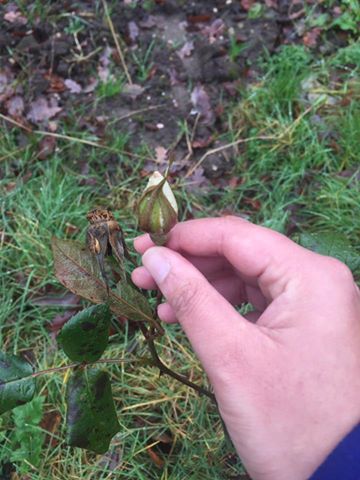
How are you still blooming, dear rose?


Any way, let’s think about what has been positive through the course of 2016 and what we have learned from it.

We have had a lot of tomatoes-Ma reckons we should sow fewer next year-all of which eventually turned red. Garlic was steadfast as ever; roses, whilst not as productive as last year, still produced a bouquet a week as the glads kicked in. There were also adventures with comic cons and a second book. Number three and four are slated for sometime during 2017. There was home brew-and a fair bit of it!-that now needs to be racked and bottled; the soft fruit did a good job, and could well be a continuing experiment.

In pictures it is far easier to see than words; there is still a feeling of loss and of disappointment, but there is evidence of growth and development. Not all years are going to be the same;there will be ebbs and flows, with peaks and troughs.

Above all, this takes time.

Roll on 2017!


Wishing you all love and light for the new year and a joyous festive season.


Blackberry wine, finally! #gdnbloggers

This is probably going to be the last home brew experiment of this year, but I have finally got around to making Blackberry wine.

I have used a recipe-a recipe that is henceforth know as Sister Sparrow’s fruit wine recipe-that is really easy to follow. A quantity of fruit is prepared and placed into a brewers bucket. You boil up a sugar syrup-say a couple of litres of water and a bag of sugar-add this to the bucket. When cool, pectolase, yeast and nutrient are added and stirred in. I then keep an eye on the mixture, it is kept covered and in a warm place; stirred twice daily. After about a week, I transfer the mixture into demi-johns. You can see the mixture brew up as real-life science experiment. I also tend to keep it covered, as otherwise you might get an interesting waft of brewing filling the house.

This time I have used all of the blackberries foraged from the plot. However, in something of a disclaimer, I have also added shop bought frozen berries. This is a mixture of additional blackberries, raspberries, cherries, blueberries and currants. The bulk of the wine is blackberry, and that was always the aim.To further play with the flavour, I did throw in some star anise and some cinnamon. We are unlikely to age the wine in oak barrels, so this flavouring with spices might make for an interesting experiment.

Error
This video doesn’t exist

You can also view the video here.

There was quite a lot in the brewers bucket, enough to fill two demi-johns, making this batch the biggest batch I have made to date. This will either turn out okay or go drastically wrong! It is always an interesting experience transferring the ferment into the demi-johns as you try not keel over.

blackberrydemijohn

Two demi-johns are now placed aside to clear. There is a slight colour difference, as one demi-john was filled before the other. Red in colour, the wine does look rather pretty! The air-locks are deliberately green so I can see whether or not they are bubbling.

experiments

Over the course of the year, there has certainly been a number of home brew experiments. This latest batch and of blackberry wine carries the tally up to six different varieties. I’m not sure if that is a good thing, or that I should be a little worried as to how much has been made and whether or not it will all be consumed. One thing that is true and most certainly, is that it is all the product of the plot.

I will have to consider how long the wines are left in their containers before racking and putting into bottles. The first batch that I ever made was the strawberry wine, and that is the one inside the bottle beneath the brown paper.  I suspect friends and family are going to get some interesting gifts in the future, other than jams, jellies and chutneys. It has been fun making Petal plonk-as it were-it doesn’t half make you think of what goes into wine, how and why.

With everything stashed away, each batch will need a name-all the preserves have a name!-other than Petal’s Plonk…..

Preserving without a pan #gdnbloggers

For me, preserving plot produce without a pan, can only mean one thing. Homebrew. Over the last year or so, whilst the growing season has been a little hit and miss, I have been able to experiment beyond jams, jellies and chutneys.

Today’s experiment, involved blackberries that were foraged from the plot sometime ago.

Error
This video doesn’t exist

There have been a number of experiments and with assorted plot produce.

experiments

I did double check, and the variety that we have are:


  • Rhubarb and currant
  • Blackberry and plum
  • Rhubarb, strawberry, currant and gooseberry
  • Apple
  • Strawberry

There isn’t actually a lot of sediment or lees in the bottles, so I will keep an eye on them and see when each one can be decanted into bottles.

Yes, make and drink responsibly, folks. Believe it or not, I do tend to have adult supervision 😉

Mooli Pod mention

moolipods.JPG

When you have radishes that bolt, you get seed pods. Or Moongreh as they are known in our house. Moongreh, or Mooli pods as I call them, could also be dried and you might want to save the seeds for next year. You could also eat them.

Eating them is fun, and one of the most vivid memories from my childhood. In the back garden, my paternal grandmother would occasionally sow mooli-that’s the other name for Japanese radish-however, these would bolt given the rather erratic nature of British Summer. When they would bolt, you would get a flush of white flowers that would dry off and leave behind these short fat, sometimes pointy seedpods. Seeds pods, that a child could snap off as they played and munch on quite happily whilst giggling at their peppery flavour.

And boy are they peppery. Just like a radish, each bite is a burst that does rather blow away the cobwebs.

You can munch on them, straight from the plant; you can also curry them. Crushed mooli pods combined with potatoes are actually quite nice!

Gardening and Mental Health #gdnbloggers

That is me, and I am standing on my allotment plot. An allotment plot that I call the sukh-Shaanti Garden. Loosely translated this name means happiness/joy and peace. I deliberately chose that name as that is what I hoped to gain from my allotment. Given how my life can get busy with school, volunteering and study; trying to find sukh shaanti can sometimes be entirely necessary.

It is also reflection upon on how the allotment feeds into my mental health.

Seven year sago, I finished my initial teacher training and was about to be come a newly qualified teacher (even after your PGCE you still have to do another year of in school development). Only, I wasn’t feeling particularly positive about the process; the end of the academic year was nigh, I was feeling rather stressed with no job and not sure as to how I had made it through the course in one piece. One day, after getting fed up of having filled in yet another application form, I threw aside my CV and thought sod it; I want to do something that doesn’t stress me out, is something of a experiment, and might have a positive end result.

What did I do?

I went to Wilko’s, picked up some seeds, compost and some labels.

I decided to sow those seeds-in May, somewhere around a bank holiday-chillies, tomatoes runner beans. These were sat outside-I knew very little then-put back in side, to and fro; there was a lot of researching that happened; before there were a series of pots lining Dad’s garden. I was determined to make a success of this experiment and needed it to get a balance.

The seeds germinated, became plants; these flowered and cropped.

We had chillies! Not to mention tomatoes, runner beans, I forgot to say about courgettes. I had managed to grow things.

Plus, I didn’t feel quite so stressed out. There seemed to be a bit of balance, focus, and also some positivity. I wanted to teach, I would get a job and do what I trained to do; the gardening was useful; very useful.

That was the first time that I realised that gardening was good for you. In the  very least, it gave you hope, focus, something to achieve. There was one big change in my mental health as the summer term ended(finished my PGCE-woo-hoo!), I had a few bits of employment as the winter drew in.  I had also developed more than an interest, I now fancied having an allotment. After all, go big or go home, that was the motivation.

And so the allotment came along-or rather, I found it, and put myself on the waiting list and waited till November. Plot 2A was mine, it was my sukh-shaanti garden. It’s been mine ever since, and  has also grown a little.

It is only now with hindsight, that I can see how having an allotment and growing seeds in dad’s back garden all seemed to make sense. Least of all because what I had sown and grown was used by Mum in the kitchen. The effect of the allotment upon my mental health never ceases to amaze me.

See that second picture of me, with the roses? Well, if grow such beautiful things,you just have to hug them and be proud of them.

There have been times when teaching and studying has rather frazzled me; yet taking a walk down to the plot with my wellingtons on and clutching a cup of tea has helped rub away low mood and anxiety. I do believe in the effect and with that, aimed to share the idea. Last year, I carried out a workshop at the Annual Conference of  the Association of Teachers of Psychology where I presented how gardening and horticulture had a positive physical and psychological effects that could be used within teaching and learning. The workshop started off with delegates colouring garden related images and ended with everyone sowing sunflowers. I was also able to raise seeds for all 200 delegates to have an envelope of sunflowers to carry out some mindfulness/gardening therapy themselves. I was really glad to hear that some colleagues had actually sown sunflowers and were reporting back success.

With Mental Health now becoming more and more present in the public consciousness, this also lends itself to the deeper integration of gardening and horticulture as strategies to support mental health concerns. Charities such as Thrive already offer horticulture based support. Gardening Leave, a charity that is sadly no longer running, used to support Veterans using horticulture.  MIND has also carried out significant work and helped to influence policy making.There is clear evidence of how gardening-just pottering-as well as therapeutic horticulture can have a positive impact upon individuals who are experiencing mental health concerns. In cases where there have been communal allotment plots used by groups, there is increased interaction with client groups reporting reductions in instances of low mood. They have felt valued and part of a community; they have improved social and emotional statuses. The effect of gardening and horticulture has been both positive and therapeutic.

Note that I have deliberately used the word ‘concerns’. Using the word ‘problem’ rather raises my hackles and I feel it only contributes to the continued stigmatisation of Mental Health concerns.

As an allotmenteer, I can safely say that gardening is a good strategy in supporting my own mental health. It was a deliberate choice to also include it when writing the first book; there needs to be a better awareness of both mental health and strategies to help those experiencing concern.

I do however have a few other hats. As a Teacher of Psychology, I am only to aware that the students in my classroom, may be experiencing mental health concerns or supporting someone with mental health concerns. As a trainee counsellor being aware is just as crucial. Mental Health permeates through every day life; with every one and every where.

There are of course many mental health concerns; from mild anxiety, depression to severe psychosis. Gardening and horticulture may not be suitable for all aspects of these concerns, but it can certainly contribute to management of some signs and symptoms. I will continue to reflect upon gardening and mental health; for me personally, it has been valuable beyond words.

Chutney: Petal, the preserving pan and me #gdnblogger

Okay, the preserving pan has been sat idle for a while; the last batch of preserve was made in August. This close to Christmas, I might have made a few more bits and pieces. Alas, the mojo has been a bit adrift.

Until today.

The last batch that we made was ‘Oberon’s relish’ which involve apples, mint and green tomato. This has all now gone to loving homes, so  I thought about doing some experimenting. There were some plot grown scotch bonnets that need to be used, and I also harvested a fair bit of mint from the allotment. Home grown garlic was also used to form the base of the chutney.


Error
This video doesn’t exist

You can see the youtube video here.

It does take time to prepare all of the ingredients; lots was chopped up before it could all get combined. Patience is required when cooking, to ensure that all of the flavours infuse and nothing burns. You really don’t want to be scrubbing the bottom of the preserving pan when burned stuff has welded itself there.

At the moment, the chutney is going to be very intense and quite fiery. Hopefully, it will mellow for a while before it can be tasted.

Over due intro to the plot #gdnbloggers

Error
This video doesn’t exist

You can also view the video here.

Thought I should perhaps add a little context with where all of the fruit and veg that is grown comes from.

The allotment plot has been going through peaks ans troughs over the last six years, with some great successes and some rather wearing disasters. This is just brief overview of the plot. It is hoped that over the coming months, there will be some planning and preparation on the plot with it gradually being tidied up for the forth coming growing season. It is something of a mess at the moment, and turning it around will take some time and effort.