Since we are sowing seeds. Why leave the tomatoes out? I have sown them at time of the year before. Only to have wiry, gangly leggy creatures that I didn’t pot up quickly enough. I’m not very good at both potting on, or pricking out for that matter. I stood in Dad’s loft, it was cold up there, rooted in the seed stasher to pull out the seeds. I didn’t have as many as I had thought, but that didn’t make the selection of seeds any easier. Laying out the packets, it was a cross between laying out solitaire cards and X factor selection. You might think, that a tomato is a tomato. Not quite. Trust me, there are people out there who will have strong views on that matter. There are quite a few heritage/heirloom varieties in this particular experiment. Last year, I had a few that were shop brought plants. Wiry and tall to begin with, with slightly odd leaves. These did actually take sometime to get growing. The plants did grow large well, but were slower to produce the bigger, beefsteak fruit.
The varieties are:
Yellow stuffer-This made the lovely yellow chutney last year, so same again, please.
Marmande-big beefy beefsteak. Very productive last year, knobbly decent sized tomato.
Cream sausage-hilarious name, but actually yellow.
True black brandywine-another beefy beefsteak. But what looks likes like a Gothic fruit. Did have a shop brought Brandywine last year, the name escapes me.
Moneymaker-I have to have one bog standard red tomato, so mum doesn’t protest. It was toss up between this variety and Gardener’s delight.
Cherokee purple. I brought one of these last year as a plant, from a local greengrocer. Big plant, big fruit, but not bad.
I do have a sense of trepidation about sowing this early. Not least of all because they all might germinate like triffids and become leggy.Must keep an eye on them, make sure that they get potted up as soon as possible. Seeds were modularised, twenty four modules. But not a lot of seeds, at this stage. Plus, I have to consider window sill space. If they all do come off, then there is the small matter of them ripening.
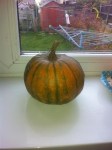
All hallow’s eve has come and go. Yet Bruno the Ghost rider pumplkin is still loitering in the kitchen. Whilst squashes such as these do last for sometime, there will soon come a time where the pumpkin might have to meet it’s maker.
In the coming week, I shall try and soup the thing. Not that I am particularly looking forward to chopping it up. Takes a while, since the pumpkin is about 6lbs, with tough leathery skin. The seeds will be saved and hopefully donated to loving homes for the next generation of Bruno Babies.
Hawwww, I have very cold feet. Really should have worn two pairs of socks in the red wellington boots.
The last of the currants and gooseberries have arrived. I pootled down to the plot with versaille currants and invicta gooseberry plants. All of which are bareroot and in need of plugging in. When I first arrived the whole of the plot was entirely white with the frost. I have seen it snowed upon, but never so chalky white and somewhat sparkly. There was something quite eerie about it. Despite only one pair of socks I was layered up with thermals, hoody and heavy coat.
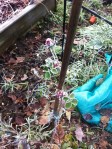
Walking down to the plot and trying not to slip over in the mud, there were roses on other plots.All looking a bit cold and frost kissed. Same was on mine, william shakespeare 2000 and lovers meeeting roses looked rather sweet in being iced over. In the last two days, we have had some rather harsh frosts.
Opened up the plant box and tried not to cut my fingers off. I am slowly running out of space to plug things into. Will have to consider carefully where exactly I plant to sink potatoes. There were three plants of Versailles currants and three of invicta gooseberry. Giving me a a very varied selection of both on the plot. I already have two redcurrant plants from poundland, but in the two years that I have had them, they have never fruited. Lots of bare rooted fruit has been plugged in now, I am still hoping to plug in some yellow autumnal raspberries that I will share with my aunty. There is a vague idea where these will go. Most likely by the autumn bliss raspberries so they are all together. At the moment though, it all looks like a field of twigs haphazardly plugged into the clay.
It has now been two year since the horticultural hobbit blog was born. You can see the introduction and about here https://horticulturalhobbit.com/about/ The blog is two years old, and I have been on the plot now for approximately three years. We are now going into the fourth year of plot growing. The blog has come a long long way since it first came on line.
I have been sowing seeds for just under five years, nearly as long as I have been a qualified teacher. I actually stared sowing during a May bank Holiday weekend in 2009. I actually remember sowing thirty cayenne chilli seeds and minibel tomatoes. They are somewhere in the recesses of the archives actually. Prior to that, I hadn’t really given gardening or growing your own much thought. At that time, I was feeling stressed and worried. I was coming to the end of the inital teaching training period and had not gainful employment for that Autumn. So sowing seeds seemed a good a distraction as any really.
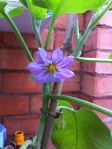
At that point, I was container gardener. I hogged one side of Dad’s garden, and built up one by one, a line of pots from Poundland. We had three running bean plants, some lettuce in a green scrappy grow bag. I remember picking those running beans. And slightly wonky, question mark shaped dwarf french beans. Cheap compost too, as I wasn’t exactly flush. Then came a week tomato greenhouse, to cover a rather dismal aubergine. I had graduated to aubergine by then,by way of experiment. I had a lot to learn, onions and cabbages were sown and plugged in when they ought perhaos not be.
Being a geek, i needed a book to help me, and I found one. Dipped in and out of it, it is Alan Titchmarsh’s kitchen garden book. I still have it, and do refer to it from time to time. When summer ended, the autumn came and I felt rather sad that nothing would grow over the winter. I kept going, and the in the following spring, found out about the local allotments. Quite literally a stones throw away. I may have inadvertently ‘bribed’ the allotment secretary. I had too many onions and not enough space in Dad’s garden. Putting my name down, I paced up and down for five months. November came, and I had a plot. Half of one at that stage. Two weeks were required to clear it all. Luckily, the half plot had been sprayed with weedkiller so once everything was dried and dead it just need pulling up and away.
This feels a very long long time ago. During the time that has passed, I have learned a great deal. What turned out to be a small scale experimental study, has grown dramatically. I had not realised just how much I would learn, and how the experiment would develop.
When it came to starting the blog, I didn’t intend to just keep a record. I wanted to share, and I was and am, proud of what I grow. Especially, if it is edible. In sharing, if I had something that wasn’t working, or didn’t happen. The chances are, someone else was likely to have a similar issue. Plus why struggle, there is no shame in asking for help. I have found fellow allotmenteers, readers across the world, incredibly helpful. Always willing to share.
You do get the odd one or two who might tut and be harbingers of doom, but for the most part, people are really supportive. Sharing, is always good. Whilst I am not exactly writing a Psychological study,and this isn’t exactly a ground breaking bit of research. Oh there is a pun in there some where. I do like to share things, be it successful or not, In the vain hope that someone somewhere might get something from it. No matter how inane it might. I still treat it all as an experiment. I’m not sure how this would all work as a research project. Would there have to be an ethics proposal? I do have to exterminate pests. There are pitfalls and positives. How boring would it be, if we had all the answers, and I didn’t learn anything. In science, we get proof of something, and other things fail miserably.
I also blog as I enjoy what I do on the veggie plot. There are some instances, where I don’t enjoy it. I mean, pulling up weeds, I hate that with a passion. Especially when it is raining, and the ground is sodden. I also believe in what i do. That might sound like a sales pitch, it really isn’t. Some folks probably would’t grow a single seed as it doesn’t interest them. As mentioned previously, I wouldn’t have. I just didn’t.
It never ceases to surprise me where the blog gets read. Perhaps I mis-underestimated the reach of the world wide web. That or there are lots of spam bots, I don’t know.
It’s all very gloom and doom outside as the rain comes down in sheets. At this time of the year, the plot is probably at it’s greyest and gloomiest.The abundance of summer seems such a long time ago. As the plot rests, we can cast our mind back to the splashes of colour that have filled the plot.
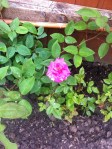
There are lots of roses on the plot. some established others less so. The lost label roses were new last year, and need another year or so to get going. Previous to that there were the posher roses, and these have really come into their own this year. Newcomer William Shakespeare 2000 sits slap bang in the middle of the plot, a sprawling mess of fuzzy red roses with lots of petals.
With the Big Sunflower Project sunflowers are planted on the plot. Some do not survive the slimers, but those that do, are a beautiful drop of sunshine. Are huge great big hyrdas in some cases, and you always end up with slighty dopey bumble bees floating around.
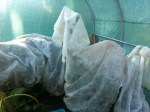
The interior of the poly tunnel looks a bit like Miss. Havisham’s boudoir at the moment. All of the chillies are still fleeced over. Good thing too as we had the first frost this week. Today was the first opportunity that I had to check that the chillies were all there, and yes they are. One or two leaves have gone a little black, but the rest remain green. May have to feed them, but they are all still very green, leafy and there are lots of flower buds.
As they look so leafy, and full of buds, I don’t really want to euthanise them. I would just like to have one chilli!
Ma loves this stuff. For most gardeners, Fenugreek is a green manure. Not many might think it’s edible. It is. Makes for lovely stuffed chappatis and curries too. As a green manure, it will help with nutrients when dug over. I will probably dig this over, once ma has made a final harvest.
As you can see, we have one 2mx1m raised bed, half of which had fenugreek in it. There had been baby green tomatoes sat next to it. Ma swears blind that there are different types of fenugreek, and the ones her dad grew when she was a child were taller and greener. She might be right, but I don’t remember them being taller or greener.
Used in Indian cooking, Ma does rather like the leaves. She also likes the mooli pods you get when you have bolted japanese radishes. She’d actually curried those yesterday.
How do you make a stuffed chappati with these then?
Using plain or wholemeal flour add the washed and chopped leaves. Add water and make a dough. Make small balls, and roll out to 3-4 mm and heat through on a flat pan or a tava (Indian pan used to make chappatis). You can also put into mashed spuds and stuff into chappatis.
To curry:
Saute sliced onions, garlic, ginger and cumin in a teaspoon of oil. Once transparent, add fenugreek leaves, add garam masala, salt, pepper, and potatos with some turmeric. Fenugreek should wilt down, and you can also add cayenne or green chillies. Add a little water, and you can steam the spuds to cook. Fenugreek has quite a bitter taste, and therefore an acquired taste. Dried, it can be used it the same way as herbs. You can also do the same with Mooli pods, which you do have to bash first.
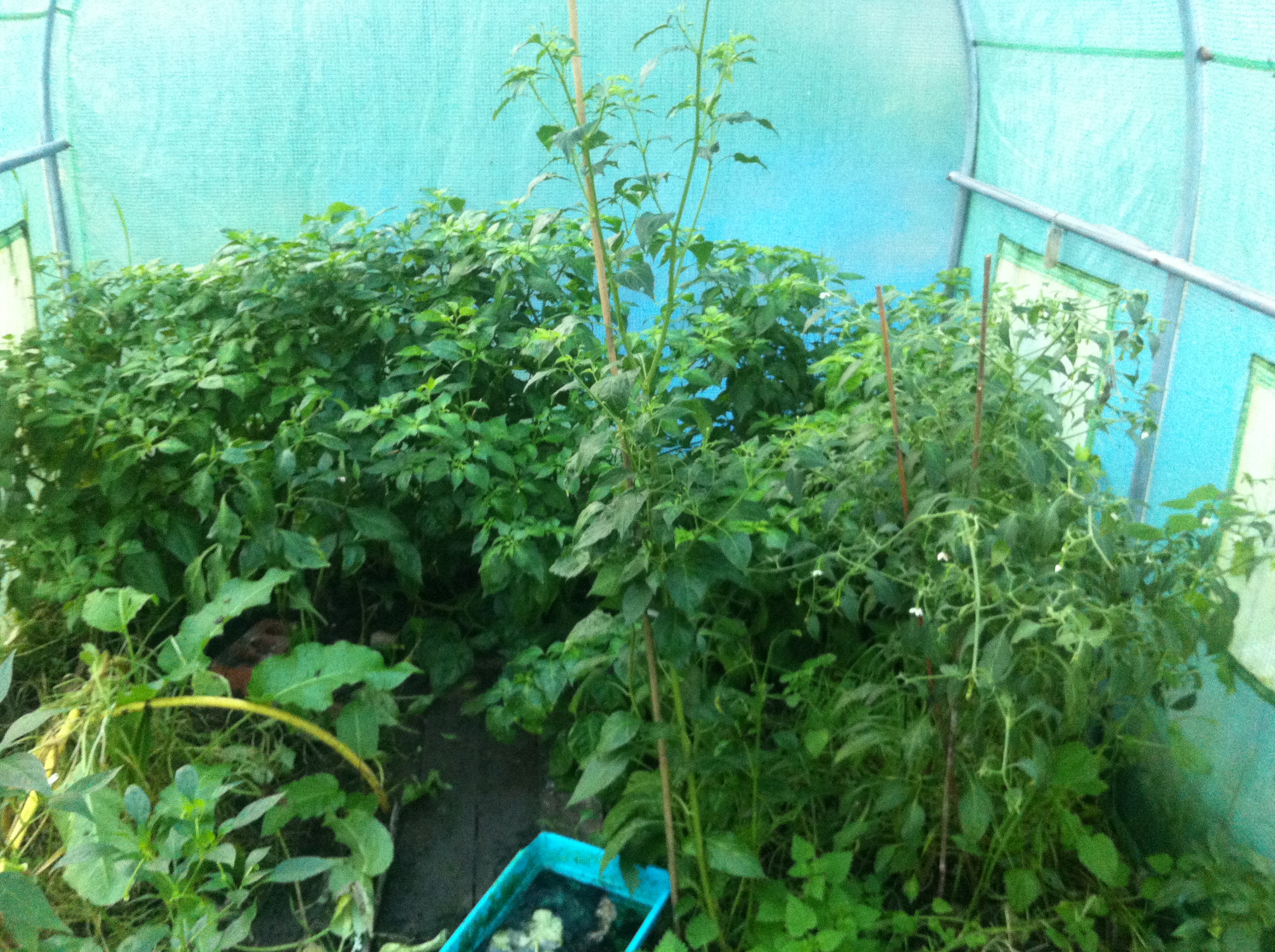
These are the chillies plants earlier this week. We have since had a frost, but these were all fleeced. This in the vain hope that they wouldn’t be hurt, but you never know. They might look a bit robust, but so far, they’ve been very leafy but not provided any fruit.
There are a number of chillies in the poly tunnel:
serrano
chocolate habanero
orange habanero
jamaican jerk
bengle and Dorset naga
hot thai
hot patio sizzle
tobasco
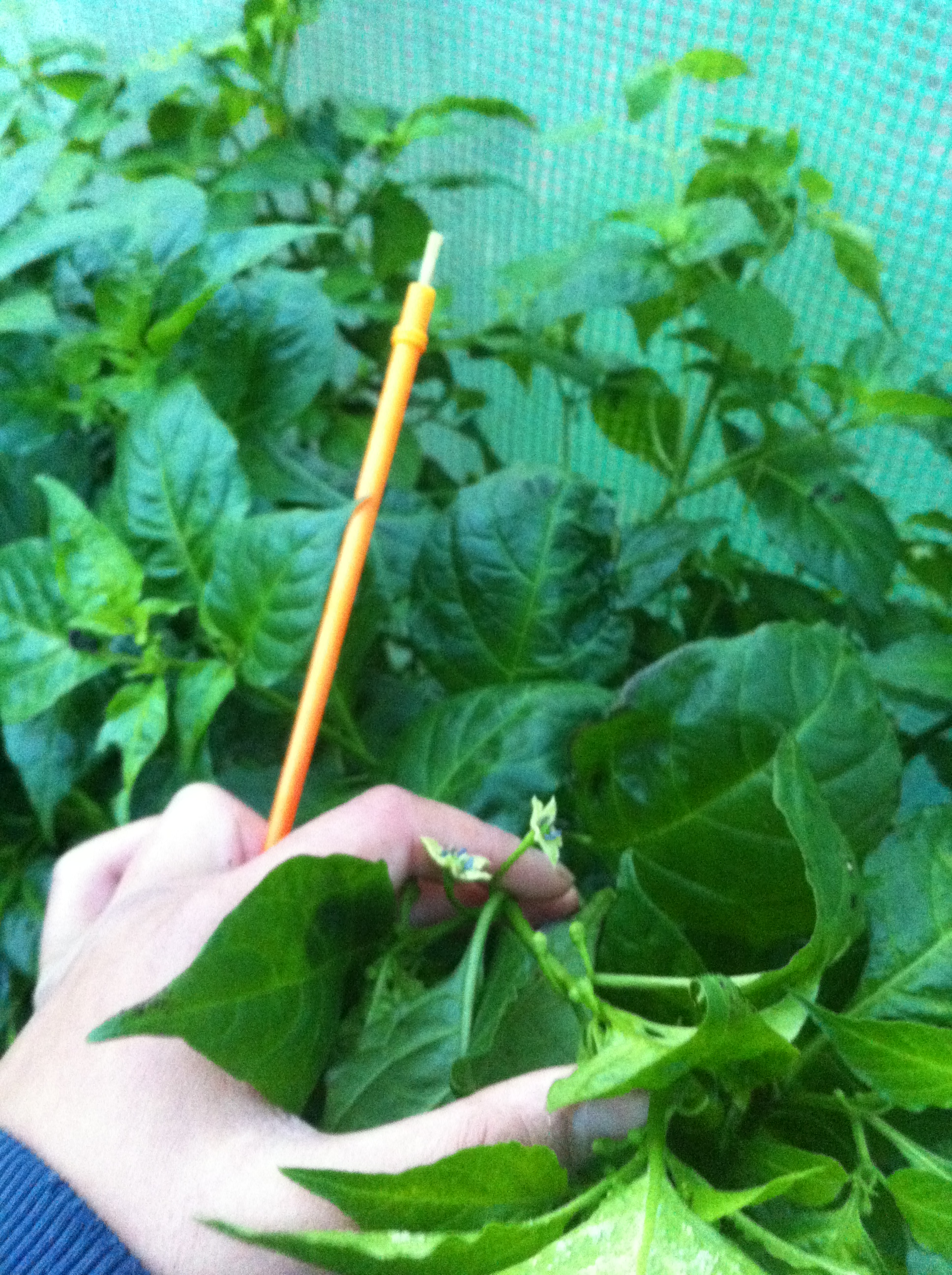
The tobasco is actually nearly five foot tall, and only just starting to send out tiny little white flowers. The others are still leafy. As you can see , I have been finding some of the white flowers and tickling them. it’s too cold to keep the poly open, and there are not many flying insects around to help pollinate.
I didn’t plan to over winter these plants, but I am now debating as to how long I can keep them. I do need to check, actually, if they are still alive. It may well be that Mother Nature has already given me an answer to that question. Would be disappointing if they have all ceased to exist. This year we have had the grand sum of three chillies.
Grapevines on the plot: Boskoop Glory and Madeline Sylvener
There are two varieties of grapevine currently being cultivated on the plot. These are Boskoop Glory, a red grape and Madeline Sylvener, which is a white grape. Both are meant to be quite suitable for the British Climate. There definitely parts of the British Isles that can grow grapes, so why not the middle of land locked England. These are desert grapes, I think, so we shall see if they do produce a vast quantity of fruit, and whether anything can be made out of them. Other than eating them, it might be nice to brew something.
There is a fourth, much older grapevine in Dad’s garden. The vines produce mammoth crop in the south facing garden, and we do nothing with him. Those grapes are red, and ripen in October. They don’t particularly taste very nice though, and that is the pit fall. Hoping that next year, they can be converted into something useful. No idea what that variety is though, and I did one year squash the lot to make a litre of Cordial. Yep, a whole litre. I was there squashing for a long time.
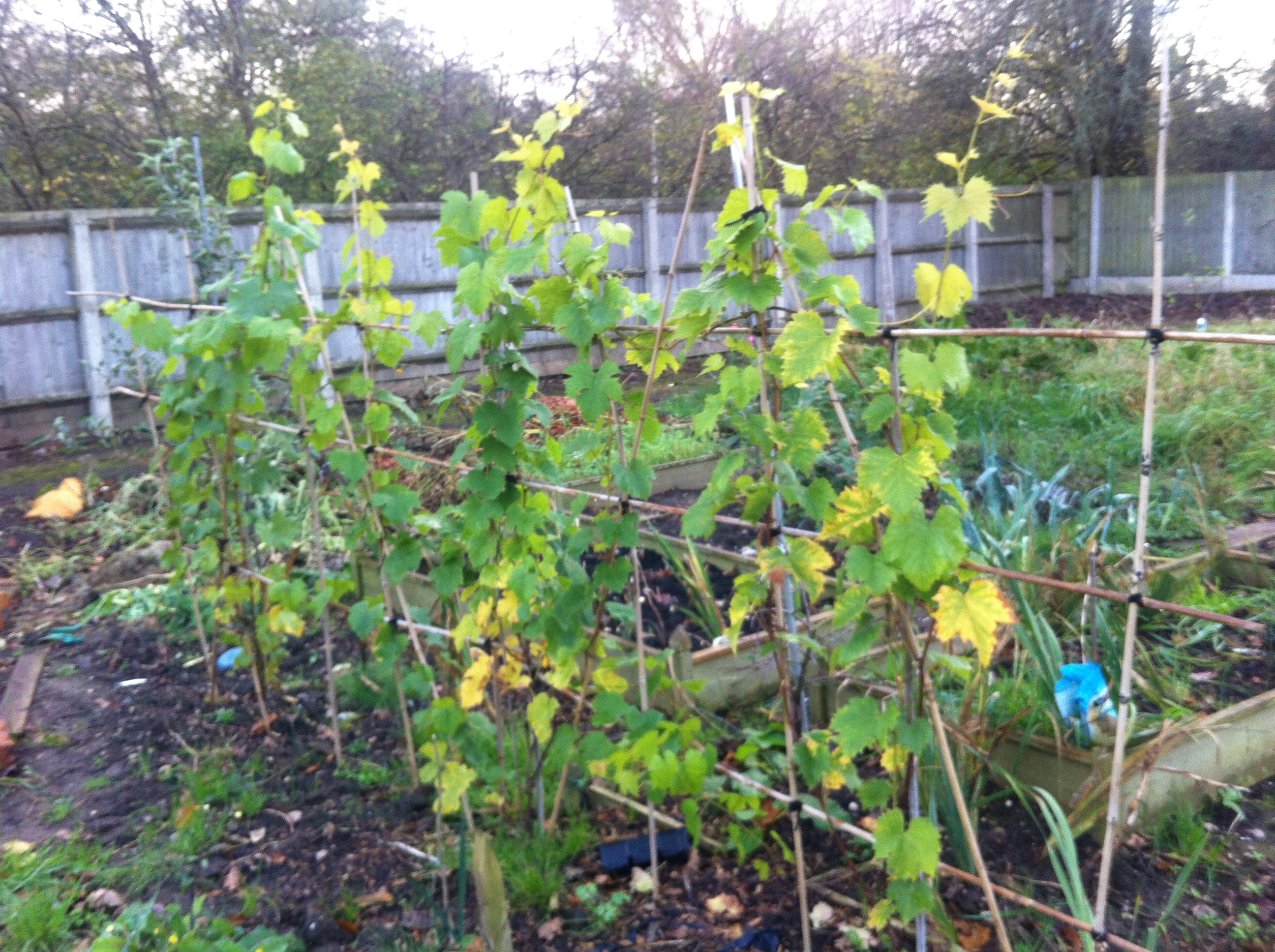
Across the cane trellis, there are thre vines growing up and out. These vines are still quite young, have been in the ground less than five years so are very much in there infancy. It can take up to twenty years for them reach their ful potential.
With their tendrils and creepers growing without restraint, the vines are starting to look a bit wndburned. Some of the leaves are alittle scorched. Overnight we have a our first frost, so I do wonder if the vines will look a little different today. They might also need a bit of a feed. Might dress the base with both chicken poop pellets and some fish, bone, blood stuff. I did that in the summer, and it didn’t appear to do any harm.
I do need to investigate how to prune the vines and when. That cane trellis is at the moment, barely five foot hight. This may need to be increased in time, with another trellis and some more canes to support the lower levels. Previously, I have spotted a very small bunch of graps. It was still there, when I looked on Tuesday. Not sure if it is likely to get any larger, and with the over night frost, may well have died a death.
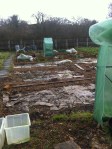
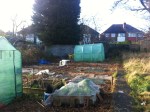
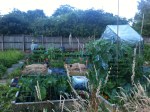
Welcome to Hobbitland, or at least my little part of it. In Birmingham, England. For the benefit of new and future readers, this is a patch of land. A vegatable pot, rented from the local council for, the cultivation, funnily enough of fruit, veg, and flowers.
What started off as 100 square metres, is now 200 square metres. I took on the second half last year, and to be fair at that point; it felt as though I was running out of space.
There have been perils and puddles, you can read all about them in the past posts. But now, the plot is starting to get going properly. The amount of things you learn, is phenonemonal. Yet one growing season won’t necessarily be the same as the next.
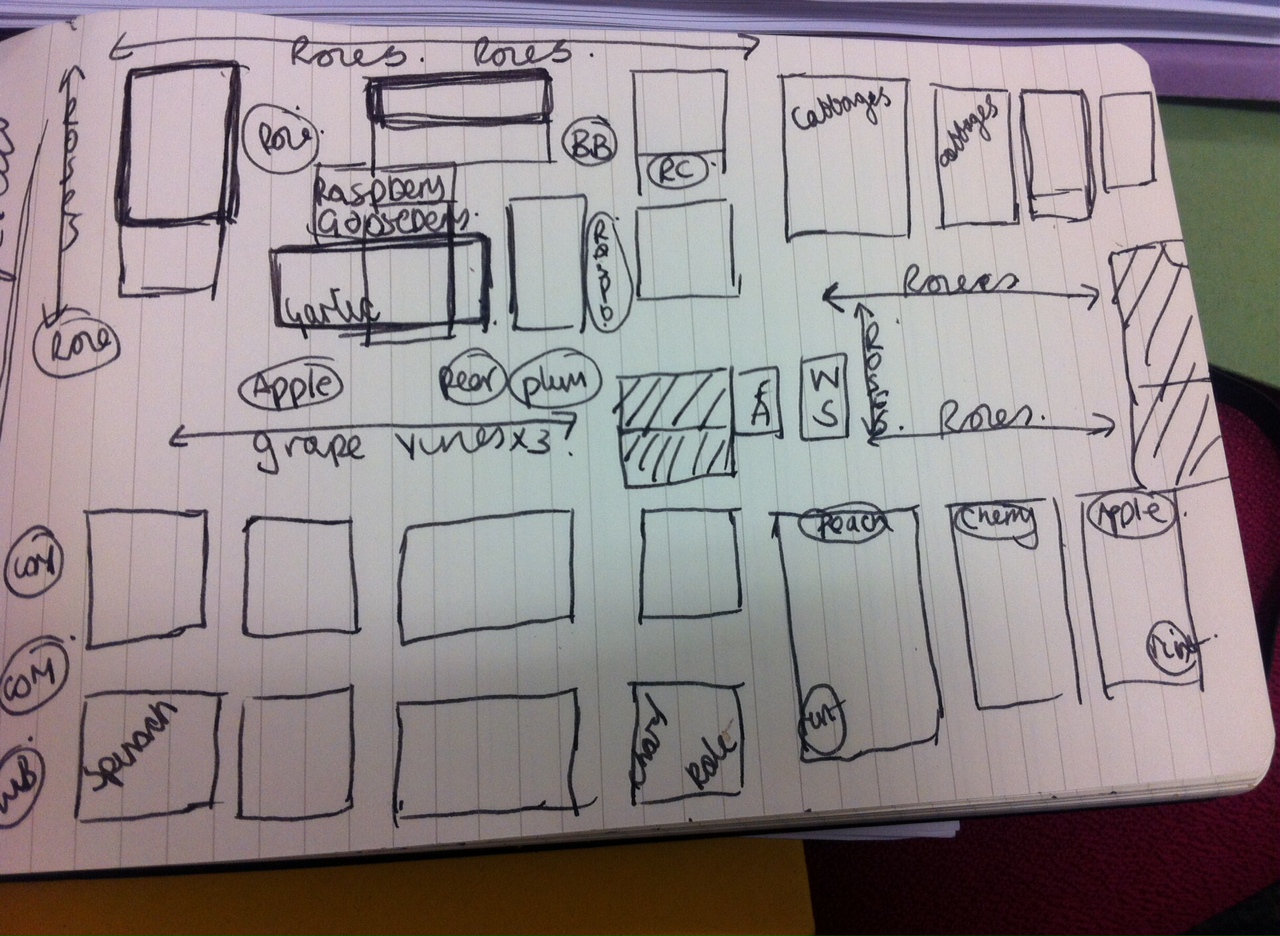
The black and white diagram that you see above, is something of an annual exerise. An opportunity to plan out and prepare for next spring. Each of the squares is either a raised bed or a bed in open ground. The shaded boxes, are the smaller wendy house and the large 2m x 3m Polytunnel. The polytunnel is currently home to a clutch of Chilli Pepper plants.
As it stands, now is time for me to tidy up the plot and to also grow over wintering crops such as garlic. Sadly, there are times where the British Winter does get in the way. Come to think of, the summer also gets in the way too. Especially when it is wet, windy, and downright drab. At the moment, the one bed does have garlic in it. There is also fenugreek and spinach still cropping, as well as lovely red vulcan chard. In years passed, I have at this time of the year sunk lots of bulbs for the spring. However, I am happy for now to have roses up and down the plot. There two dozen, perhaps, roses, that in the height of summer have produced fantastic blooms. I concede that they are not really edible. But what would an English Garden be without a few roses. There is even one called William Shakespeare 2000. As well as would be posh roses, there are some less posh ones. Some from a poundshop, some that are mysteries entirely. They are lost label roses, and could be anything. All of them will be pruned in the coming months to help them regenerate for next year.
You might have observed that there are some fruit trees. I have forgetton, to label the rhubarb. Most of these trees are two-three years old. I have victoria plum, braeburn and falstaff apple, rochester peach, a cherry tree the name of which escapes me. Concorde pear as well. The plot is home to one domesticated ‘Reuben’ Blacberry. In being domestic, this is thornless. Wild blackberries are full thorns and will tear you to shreds. I am lucky that the plot is edged on the far side by such wild blackberries. These have been jammed quite a bit this year.



































 horticultural 'obbit