Tag Archives: mental health

Piece of Mind: Mental Health Awareness#MHAW 2016

Yesterday  saw the start of Mental Health week 2016.It is also, funnily enough, National Tomato week.

At first glance, those sentences couldn’t be less connected. It might cause you to question how the humble tomato might link to Mental health.

And if it does. Good.

That question is well worth considering.

I like gardening, I like tending to my allotment; I also happen to have an interest in Mental health. Over the last few years, the two have become somewhat linked.

By trade, I am teacher of Social Sciences; my specialism is Psychology. I have been teaching for a number of years, about the science of the human mind, our brains and behaviour. In doing so, I have be able to reflect beyond the visible and easy to see Physical health. My experience has informed me that whilst the medical model is heavily entrenched in what we can see, there are concerns that exist even though we cannot see physical signs or symptoms.

Not only do I teach, I have become a trained listener, I support survivors of abuse and also have an interest in supporting veterans of conflict. Mental health is a concept that somehow has managed to feed through all of those areas in one shape or form.

Being on the allotment, is something I enjoy. There may well be the odd tantrum when things don’t germinate, or the plot gets waterlogged. These things happen; but the plot also serves to have a rather positive impact upon both my physical and mental health. Physically, I will know about it if I have been digging or dragging my wheelbarrow around. There is a great deal of activity to be done on the plot. Mentally, the plot has a number of functions. In the first instance, there is a sense of mindfulness. Being able to stop, pause, take stock. To think about the here and now. Second, you find yourself thinking of other things rather than marking, planning lessons or trying to work out how you might have changed a lesson. Third, you get to experience mud beneath your finger nails in connecting with the world. Fourth, you realize that sowing seeds and seeing them germinate does rather make you feel warm and fuzzy.

Yet the merest mention of Mental health and the subsequent response is anything but warm and fuzzy. There is still alot of stigma, negative attitudes, and a disparity on a national scale as to the support available to those who experience mental health concerns. In the last eighteen months, I have noticed there have been attempts to shift the perception of mental health. A number of organisations have made strides towards an increased awareness. Even the venerable Stephen Fry tried to remove the use of  the stock ‘head clutcher’ image so very often used to accompany the words mental health.  Mental  health has started to come to the fore in the media, and people are talking about it. People are sharing their experiences, their journeys and making incredible first steps in helping Mental Health be placed firmly in the public consciousness.

Only in the last few days, I have seen the ‘Campaign against Living Miserably’. Prior to that, there was Professor Green’s documentary about how the increasing number of men committing suicide. The mental health of children and adolescents has also become a talking point. There is something definitely in the water.

As a teacher, I am mindful of a number of things. The students that I work with, may well be experiencing mental health concerns; they may know of someone who is experiencing mental health concerns, they may have questions in general about mental health. Fortunately, I am able to listen and signpost if necessary. I am more than willing to offer support. Sadly that is not always the case, and there are unfortunately, communities out there, where Mental health isn’t spoken about. If it is spoken about, it is discussed in hushed tones, behind closed doors and with people surreptitiously looking out for the Joneses and Patel’s lest they hear something. The mere sight, sound and feel of mental health concern elicits a shaking of the head, a tut, and a ‘pull yourself together’, and further makes a difficult situation even more challenging.

I mentioned the fact that it is National tomato week. This is a nod to how over the last few years the activities within therapeutic horticulture (or horticultural therapy depending on where you are) have contributed a great deal to supporting individuals with mental health concerns. The charity MIND was very successful in using activities and being able to measure the level of impact. Thrive is another example of work carried out to positive effect.

For me personally, having an allotment and tending to it, has been a really very positive experience. Beyond the lack of germination, the odd slug attacked cabbage, I firmly believe that my outlook, my mental health has been positively influenced. For example, when you have marked two dozen essays, are seeing stars; seeing the roses that you planted in full blossom is always going to gladden the soul.

So why not smell the roses? Why not, during Mental Health Awareness Week, sow a sunflower, sink some runner beans, try and sow some lupins or maybe you fancy growing your own Dahlias? You never know.

Beyond that; if you are experiencing mental health concerns, then you are not alone. There is support, talk, have a chat.

And if you know of someone who is experiencing mental health concerns. Listen. You’d be surprised just how much that helps.
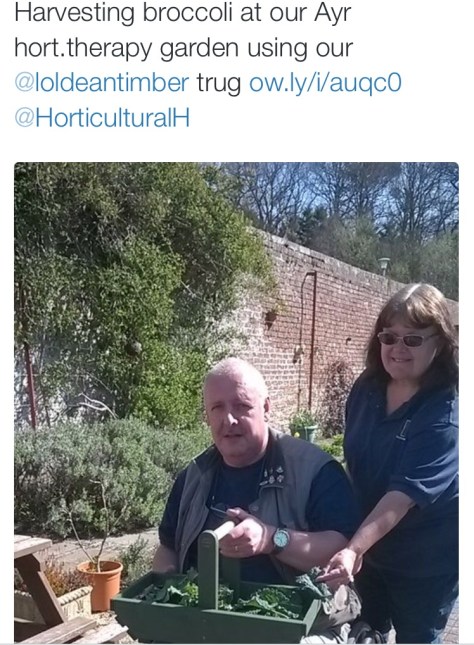


Gardening and Mental health…another article

This particular article has been doing the rounds for the last few days on social Media. Whilst it is written by one of the more *interesting* of British Newspapers, it does raise some interesting points. Especially as the gardeners of Britain count down for the arrival of Spring and are able to once more get their green fingers dirty.

In the first instance, I will caveat things by saying don’t be fooled by the sample size mentioned at the end of the article. 112 participants does not make for a generalisable sample. I am also curious about the nature of being ‘stressed out’ as it is termed. There is no comment as to how that has been operationalised and doesn’t mention any form of mental health concerns that may exist in that sample. The research is prefaced by examples and anecdotal evidence involving different situations. I am however wary of the scientific process behind this article and how the article may be interpreted. The perils, I guess, of being a teacher of Psychology with horticultural tendencies. I am likely to consider the research methods used to question the scientific rigour that is being presented.

That said, I do believe that gardening has a positive effect on Mental health and well being. Both on personal level and also on wider level when groups in society feel the positive impact of being involved in green spaces. There was until recently a charity in Scotland-Gardening leave- who used horticultural therapy to support veteran of conflict and did it very successfully from what I have read. Sadly, funding became an issue, and the charity had to close down operations. Then there is Thrive who also use horticulture as therapeutic medium.

gleave
Spring summer 2015


It is a shame that gardening and horticultural therapy (also called therapeutic horticulture, yes, I know, the terms are used interchangeably) occurs, but doesn’t get the wider publicity that is deserves in order to get momentum and become wider spread. There have been initiatives, such as the one run by MIND , a few years ago and these were successful. So much so, that the results of influenced public policy. I feel really very strongly about it, having worked in a number of posts where school gardening clubs have helped support learners. Some of which, were vulnerable or have had mental health concerns. It also saddened me that Gardening Leave had to close it’s doors, and my immediate hope what that the veterans that they supported would have appropriate support systems put in place. With the value and implementation of gardening and horticultural therapy being so limited, I consciously wrote about the positive effects in #plantpottales. It is not necessary to have a huge great big allotment to see the benefits, containers in a garden or a kitchen window sill would just as positive and just as useful.

I will continue to talk about the positive effects of gardening on mental health. All being well, someone might actually hear me and listen.

Colouring for grown ups: Psychology with horticultural tendencies

Being a teacher of Psychology with horticultural tendencies, when those two worlds collide, my ears tend to prick up. Last month, I was part of the Annual conference of Teachers of Psychology and delivered a workshop about mental health and the use of horticultural/eco-therapy. The focus was on how teachers might use gardening as a means to improve their mental health. Whatever way you might argue the toss, teaching is by far one of the most stressful jobs on the planet. After six years as an educator of sorts, I can safely say that such a statement is true.

On that Sunday morning, I was very fortunate that a lovely group of delegates attended. I had been pacing up and down for a good few weeks before hand, hoping that they would! And the first thing that we did, was a spot of colouring.

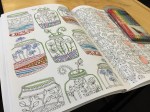
It started out as being something innocuous, I’d come across a colouring book called ‘Glorious Gardens’; a colouring book for adults. I picked  it up, this was going into my workshop. I would even have crayons. The delegates liked it, they rather enjoyed the colouring book and it dovetailed into the theme of the workshop.

What I didn’t realise is that I was jumping onto a bandwagon that was already rolling. I was holding onto the bumper as it went past me.

There was even a BBC news report.

Colouring is a big thing! Whilst we think that this is an activity for children, there are actually no explicit rules that suggest that adults shouldn’t do it. Perhaps we grow into adults and find other more pressing things to occupy our time.

Needless to say, I have jumped on the bandwagon. There is research evidence out there, that suggests a link to mental health, positive psychology and mindfulness. I am, of course, going to be a little biased, being a Psychology teacher. It does make sense to me, and there are cases where older adults with vascular dementias are supported with the use of colouring.

In the report above, a lady name Johanna Basford is mentioned. One of her books is in the gallery above is her, as well the ‘Glorious Gardens’ one.

You might assume that colouring is simple. How many of us have seen children pick up a crayon and colour with their colouring books? Their grip may vary developmentally from spear to pincer as they grow, and their colouring space will be larger for visuo-spatial recognition Makes sense to me, and it’s very difficult for most children to stay within the lines. It’s difficult as an adult too, I assure you. Both of the books are very intricate in places. I also didn’t have the best quality pencils or crayons, and I rather like the idea of felt tips and fine liners. As an adult, there is precision.

In the last week, I have been very fortunate to have made windows to colour. I quite like. I did find it difficult to let go of the rules that we as adults use to guide our lives. We all have schema, social scripts, that allow us to negotiate the world around us. Rules and regulations that govern what we do, how and to an extent, why.

Only in a colouring book, would you therefore have blue flowers and blue leaves. The closest blue plant I have, is a lilac rose, and not remotely blue as we would expect. Even then, I was thinking about the flowers and colours on the plot. Seeing things in a context, so as to make sense is fairly useful.

The process does take a bit of focus and a lack of it at the same time. On one hand, you are trying to colour, stay within the lines. On the other, you can clear your mind. Things that would ordinarily clog up your mind, dissipate away. Something rather useful, given how mental health is becoming more and more visible in the public forum.

I like the colouring, I really do. Try it. You’ll never look at your eyeliner in quite the same way again.

…since not everyone is going to have felt tips in their handbags.

#NABLOPOMO: Psychology Sunflower Challenge @theatp

As you are aware, I have sown sunflowers to see if these impact on the mental health of teachers. At this stage, my sunflowers aren’t doing too badly. I did worry when we had the horrible frost the night before last. They are still there, I had to check today!

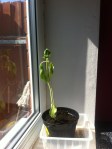
Getting taller, they are chomping at the bit. I don’t think it will be long before I have to transplant them onto the plot. I did sow some additional ones about a week ago, and as they are quick growers, three babies were already potted up. I am hoping that the one sat by the window, does revive. It was in danger of snapping and keeling over. Perhaps when it is a bit more sure footed, it will return to it’s class mates.

Update: Psychology Sunflower Challenge 2015

As you are aware I am trying to start a Psychology Sunflower Challenge.

baby sunlflowers
baby sunlflowers

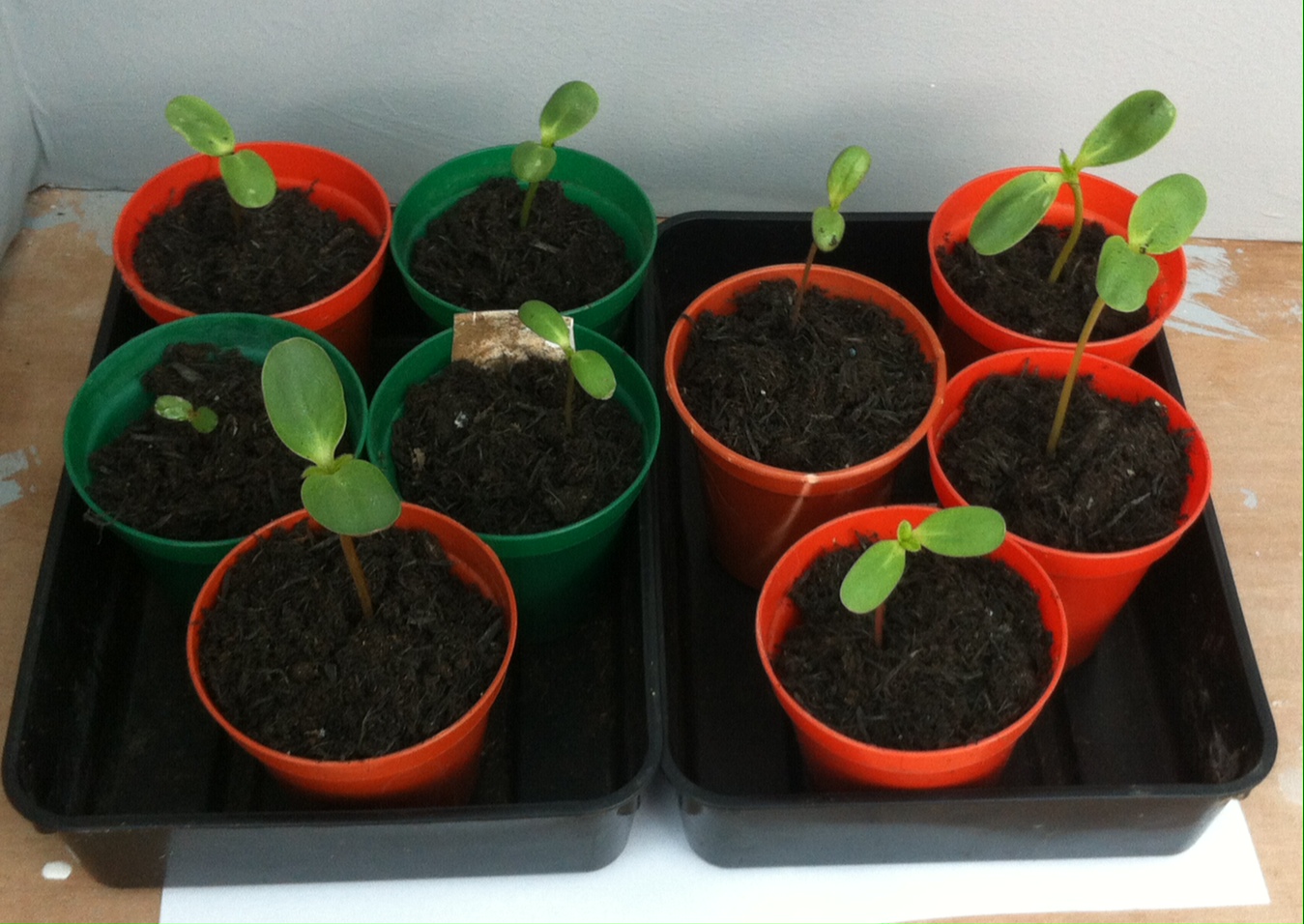
About two dozen seeds were started off in damp jiffy pellets, and made quite rapid progress. In my experience, they do grow very quickly, and you do end up potting them up quite rapidly.

update260315

The seedling babies were growing quite quickly on the window sill, so did need to be potted up. Otherwise they get leggy, bend, and keel over. Cue emergency pot up. As you can see above, they have placed into small pots and are on their first baby leaves with the true leaves just about to sprout. These are greedy, sun loving creatures. So they do need warmth, light, and for now, water. The compost is full of nutrients for the next six weeks. By which time, it will be necessary to harden them off, having possible put them into bigger pots. They will need to be protected if there is a sharp drop in temperature and a frost.

I have sown two varieties here. These are sunburst, which get to about five tall, and giant sunflowers, which are something even taller and with multiple flowers.

Hopefully these will all continue to thrive and survive. Will hopefully sow a few more and encourage more pollinators on the plot.

If you have sown some sunflowers, then please let me know. Would be lovely to see what is happening  ^_^