Remember that green pumpkin above, the little green one?
Well, I have that to my aunt. It had turned orange over the last few weeks and she was ready turn it into something edible. So today as an early diwali present, she handed me these.
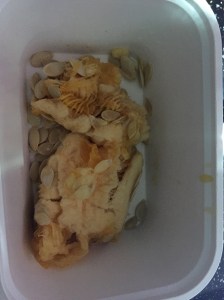
Seeds. I had asked her to save them for me. The plan, as with all bruno seeds, is to save them, dry them; and send them to loving homes for next year. The seeds were in one hand, in the other was a tupperware box of pumpkin soup. So two presents, for the price of one.
Bruno, one of three, has come full circle. From being a seedling, to a heavy vine, from which we harvested a fruit. To curried and souped, with his seeds now drying.
Bruno, one of three, you actualised your potential.
With the leaves falling and autumn kicking in. It is very easy to get annoyed with the litter of golden leaves that form in small mounds on the pathways and roads.
Over the last few years I have been using nature’s refuse to fill the dozen or so raised beds on the plot. Whilst is not particularly full of nutrients, it does have it’s uses. I use it as filler so I don’t have to spend a small fortune on multi-purpose compost as the levels of raised beds decrease over time. Leaves are dumped to decay over the autumn and winter months, and then in the spring, I cover with multipurpose compost.
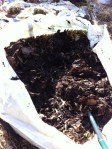
Leaves are gathered up Dad and put into gardening bags. Dragged down to the plot, these the fill the beds along with any other organic material such as grass cuttings. I have in past, put thirteen or so bags into a one tonne builders bag. This over the course of eight months has then decayed down into a soil like consistency. As mentioned above, there is very little nutritional value. Leaf mold is therefore best used to improve the structure of soil and bulk it out.
One year I used one builders bag in a raised bed that was planted up with marrows and courgettes. I can safely say, that the plants grew exponentially, because of the decaying material.
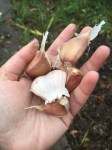
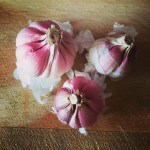
The second batch of garlic is from The Garlic Farm. This summers crop was by far one of best I have had had, so for me having them again was really a good way of trying to replicate that success for next year. Hopefully it will be just as successful. I was really surprised, and impressed, by the size of the bulbs that cropped. Also there is a real and definite difference in the flavour and strength of home grown garlic compared to that bought in the supermarkets.
picardy wight (I had to resist saying ‘make it so’ as i planted this one)
Vallelado wight
early purple wight (we’ve had this one before)
Provence wight
Solent wight
This batch has been sunk into two raised beds. I had thought that I had too much garlic. As though such a thing might be possible! The worry had been that there wasn’t space. Turns our there was enough space and more. I have saved the elephant garlic to share with my aunty, for some reason it bolted on my plot this year.
At least now all of the autumn garlic has been planted. May be, just maybe, I might try a spring batch.
Thanks to Marshall Seeds who kindly send me some heritage garlic varieties; and start with with arguably the first planting for next years growing season.
In general, Heritage fruit and vegetable varieties are still very new to me. Something that I tried to do this year and am looking to carry on into the future. Garlic is no different. It is staple part of many Indian dishes, and Ma will always use the crops that we produce on the plot in her kitchen.
Over the years, I have sown and grown many different varieties. The varieties in this batch are:
Red Duke
Garlic Mikulov
Garlic Bohemian rose.
I have broken up the cloves from the bulbs. Each individual clove is then dibbed into the freshly dug over earth that we prepared last week. I say we, but in reality it was my mum digging it over and removing the weeds and grass that offended her by just growing. She doesn’t the weeds and is always trying to make the plot what she terms to be ‘tidy’, I do not know how the grass even dares, in knowing that it will be unscrupulously pulled out.
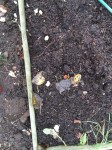
I am conscious that there is a risk of bird pulling the cloves out, so they are covered with only the tiniest bit of clove sticking out. Hopefully, they should be okay.
That is what happened to the assortment of potatoes that the allotment plot yielded this year.
lady balfour
Pink fir apple
aloos! International kidney
There were a number of varieties that sunk on the plot, in the raised beds. We had international kidney, lady balfour, pink fir apple, kestral and red duke of york. The red duke of york were a bit hit and miss having been sunk into the earth in the poly tunnel by way of experiment. I don’t think I will be doing that again.
All the other varieties were sunk into raised beds. These were filled with either leaf mold topped off with multipurpose compost or well rotted and very crumbly farmyard manure. I did this as drainage is an issue with the heavy clay on the plot. In the past, heavy clay has basically eaten the seed potatoes in having caused them to rot due to excess water retention. With raised beds, the drainage is some what improved, and the seed potatoes like sleeping under nice organic material.
Internatioal kidney were cute and bountiful, lots of small round, creamy white potatoes. Pink Fir apple had to be the most abundant, with pounds and pounds being harvested. On average, we harvested one 10kg bucket every week. About four or five harvests were made over the duration of the harvesting period. As you can imagine that is a lot of potatoes. That was even before the lady balfour potatoes were harvested. These, thanks to the farmyard manure, were something of a whopper crop. I have grown these before, but have never harvested potatoes that half the size of a football.
All of these really were mashed, chipped, roasted and boiled. Not to mention put into stuffed chappatis. And the varieties matter. Pink fir apples do go well into stuffed chappatis. Lady balfour make for interesting, sweet flavoured chips. They do also tend to get a bit sloppy when mashed, but do hold together when roasted.
I have never found potatoes to be simple, though for many allotmenteers they are. I was gutted one year when the heavy clay caused them to rot. I learned that they needed soft friable soil. Even then, I don’t earth them as is done traditionally.
The humble spud, seemingly simple; can actually be complicated.
It’s been a whole year since I first participated in NaBloPoMo. It was a really interesting experience, sharing plot adventures to an entirely new audience. An audience who wouldn’t perhaps ordinarily be reading about the adventures of an allotment holder in Great Britain. Throughout NaBloPoMo the blog audience grew, and it was amazing to see just how far the blog was going.
In the time since, I have also participated in the April NaBloPoMO too. That was an additional learning experience, especially as the theme was ‘Grow’. Seemed apt given the nature of the blog. Plus, it was the start of the growing season, and sharing the start of the growing season was really very useful. Since then, both the November and April NaBloPoMo’s the allotment plot has changed, grown and developed a great deal. There have been the usual slug, snail and crop dramas. As well as the qualified and unqualified successes.
Securing the vines
lady balfour
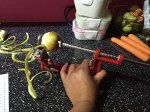
prepping apples
fruit bounty
well and truly on the turn
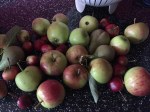
apples and pears
Apple and Chillies
orange habanero
vased up
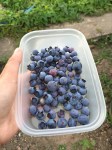
Blueberries: darrow and blue jay
Pops and Beans being beamed
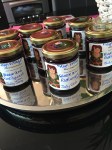
preserve pots
garlic!
ta-dah!
one ripened cayene
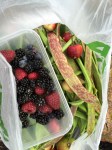
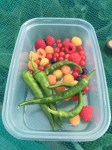
cayenne and assorted soft fruit
two gin infusions
the second summer raspberries, the birdies ate the first
ta-dah!
You can see from the gallery just how it has all developed. From the tranche after tranche of runner and climbing beans-ma got fed up of freezing them-the potatoes. I really recommend Pink Fir Apple, for being such an abundant cropper. Chillies, that were hit and miss, with the tomatoes really struggling this year. There was home made ice cream, when there were lots of home grown strawberries.
Whilst there was a lot horticultural allotmenteering happening. There was also another project that started out as something of a whim at the start of the summer. I remember saying to my sisters, that I really fancied writing an ebook. Also, I had written some guest blog posts for World Radio Gardening, so this seemed something very natural to do.
me and my book
When you have one idea
and then you have another idea
So I did. I wrote that book. Over the course of the summer, between work and the plot; I wrote the book. My book. One of the NaBloPoMo prompts from last year, was whether or not one had book within. At that point, I didn’t think I could have. Writing the book really was process. From writing down chapter headings, writing in my notebook in blue ink, to listening to my mum dictate recipes. I cannot describe the feeling of words and ideas surging around in my brain and wanting to exit onto the paper. This book really wanted to be written. I would be lying if I said this was an easy process. It wasn’t. It was hard for hear about feedback, for example. It wasn’t bad feed, it was feedback to help me make the book better and from cheerleaders. Cheerleaders. These are very important people. People who have faith, inspire you, encourage you. Not the sort who huff, puff, and tell you that what you have done, isn’t worth the paper that it is printed on, or the e-ink it contains. Good people, and the feedback was important. It came from the right place.
The book was on kindle at first, and it took a while for me to pluck up the courage and then put the book into print. After all, not everyone has an e-reader. I am also a book worm, and books have always been a part of my life and my job.
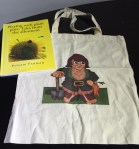
What started with the book, has diversified. You all know petal, she’s the avatar, the logo, the brand that is on the logo. The figure holding carrots. She is all mine, and perfectly sums up the blog. So, putting her on a bag and a logo, seemed a good thing to do.
Beyond the plot, there has been a spot of mindfulness. The magic square project is still going, alongside the johanna Basford ‘Secret garden’ colouring book.
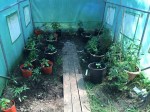
I had a lot of hope for my tomatoes this year. I would sown them when the conditions were useful, plant them into the poly tunnel. Take on board on the learning from the last few years. See if I could really maximize the potential crop.
As I write, there are still tomato plants in the poly tunnel. Whilst the weather is starting to turn, and the plot now dons it autumn winter apparel and has a rather miserable visage; I am hanging onto the tomatoes to see how far they go.
The kick off
right hand side
cream sausage tomatos
It feels a distant memory, but planting out the growing plants was the start of the possible adventure. Positioned in the poly tunnel, I aimed for two things. First, ripe tomatoes; they were all planted under cover for that very reason.In previous years, whilst there was an abundance outside, they were all green. Second, green tomatoes would be a bonus.
So the things grew. I had a number of different varieties. Some were new, the heritage brandywines and cream sausage. There were also some staples, I had stuck with yellow stuffer.
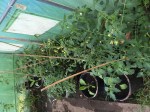
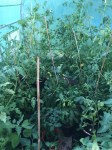
The tomatoes grew like triffids.
triffid tomato
marmande beefsteak tomato
cream sausage tomato
There is a bit of confusion, that I will gladly admit to. To defoliate or not to defoliate. There are some varieties that do need the side shoots removing, some that don’t. Also, the argument for photosynthesis does make sense. So where do you draw the line? How far you go in removing foliage, if you remove foliage at all? There were times, where it near enough impossible to move in the poly tunnel without having a yellow flower or green leaf tickle your nose.
The key at all points in the process was fruits.
bit orangey but nearly
on the turn
collected from the plot
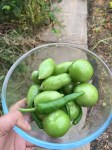
In previous years I have been swimming in green tomatoes. Naturally this has lent itself to chutney. So there was something of a disappointment in not having many fruit and even then, not many green ones.
I am not sure quite sure what went wrong this year. There are a number of variables that need reflecting on. Was having slow maturing beefstakes a step too far? Was the poly tunnel too congests, or did the weather scupper all hope.
Shall be looking at the seedboxes to make a decision about what varieties will be sown next year. To think tomatoes are meant to simple.
“Oh, Punam, I went to the Plot, your grapes were flat again. Tomorrow we need to fix them.”
“Right, okay.”
“Oh, Punam, we didn’t see these. All of these marrows. We must have missed them.”
And so started the conversation, and I suggested we take a walk and see what the deal was with the plot. This week has seen a return to work, and teaching has started. I was in something of a daze yesterday at six in the evening, having finished teaching; so a walk this afternoon was scheduled as being necessary after a day of training. I am hoping to do some volunteer work in the coming year, so a large proportion of my day had already been spoken for.
“Mum, there’s seven of them?”
That means chutney at some point this week.
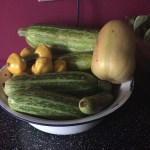
We took a walk, and removed the last of the patty pan, sunburst courgettes. There are a few other yellow courgettes remaining; and soon they will slow down. Once all of the squashes have started to die a death; the aim is to take up the plants and compost them back into the ground. I know that I shouldn’t plant more plants than necessary, it is however difficult to not comply when your mum wants more than one plant. Yet we both get fed up of seeing frequently appearing squashes by this time of the year.
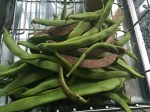
The climbing and runner beans are also starting to slow down. The last of them-she says-are now waiting to be chopped up and frozen.I had forgotten just how much you end up with, if you sow quite a few plants. We have had a combination of blue lake and cobra climbing french beans, as well as borlotto beans, scarlet emperor and painted lady runner beans. These had been sown in two batches, as I had been convinced that the one tray simply wouldn’t be enough. I think mum is quietly fed up now of chopping and freezing them. She is still to get used to the colour of the borlotto beans, I think they add character to the wig wams.
It has been a while since we have successful cropping of a butternut squash on the plot. The very first one was called Gladys, and this one would be gladys mark three. After all, even the ghost rider pumpkins are always called Bruno. I cannot remember now whether this is waltham or hunter. It is butternut squash nonetheless. There have been yellow butternut squash type thing harvested during the summer, more spherical in shape. Not too sure as to what will be done this with yet, but I am sure that it will be put to some good use.
Newly arrived today is the box of over wintering garlic that will be waiting to be sunk. I think the latest that I have ever planted is the end of November, so I am aiming to do sow sooner than that. This will mean clearing raised beds of the assorted plants before plugging in. I don’t plan to sink into open ground as the heavy clay tends eat the cloves and I also find it harder to monitor weeds.
The plot has been busy. Very busy. With autumn, we have the opportunity to take stock of what has happened. It’s not necessarily an end of year review, that is reserved for New’s Eve. No, this is a case of reflecting on the journey that has taken place over the last ten months,
A journey, that started two days after Boxing day-i think-with the sowing of chilli seeds. That for me, was the start.
As I come to pay my rent for the next year, I really must do that soon, I have a wealth of learning experiences going into what is my fourth year on the plot. It is with this milestone that I can see just how far I have come. Particularly with the grapevines. These take on average between three to five years to become established, and here we have our first ever harvest this year. The thin wiry twigs that were planted years ago, have become strong and fruitful. They do need extra support now, what was a temporary frame back then, now requires significant bolstering.
Another more concrete example, was the spuds. I have stopped counting now as to how many pounds or kilos, for that matter, that have been harvested. I feel as though I have broken something of duck. Learned a technique if you like, how to best plant, picked out appropriate varieties to gain a healthy and abundant crop. I am sure that I will be seeing Pink Fir Apple in my sleep. They have most likely been put into every dish imaginable by Mum. Yesterday, I found one in Punjabi Khadi.
For the inside the poly tunnel, I am a little perplexed. There were tomato plants galore in there, with chillies and aubergines. The chillies, did okay; lessons were implemented. All were planted into pots, we had a none too bad crop of chillies. Aubergines, have reiterated their point as being a pointless exercise for me. I need to consider whether growing a seed, is equitable with rescuing plants from the garden center.
Eighteen tomato plants were sunk into the ground of the poly. They grew, they grew into six foot tall triffids that were defoliated from time to time. All they grew, was leaves. Maybe the occasional tomato. At a point where I might ordinarily be drowning in green tomatoes; there were none to be had. I was in a different time zone, when Mum found a single, solitary red one. She sent me a picture, to contain her surprise. The questions that arise here, are two fold. Was it the selected varieties, or was the weather just generally a bit unaccommodating? I am going to say it was a reflection of both. Some of the varieties were the slower maturing ones, and I do think that the poorer weather-in comparison to last year-simply never gave them a fighting chance. Even the roses, suffered; but the gladioli kept going.
paperback
ebook
Plot plums
sunflooer!
bit orangey but nearly
Blueberries: darrow and blue jay
garlic!
preserve pots
chopped up gooseberries
pretty blooms
seed box
ta-dah!
mama and the trug
Indian mint…and mama
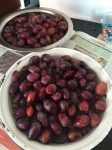
Soft fruit was a bit hit and miss. Strawberries, took flight, and we had enough to watch Wimbledon by. The runners are now running amok. Raspberries, well, the pink ones did precious little. With the autumn raspberries a bit confused and cropping quite well. Blueberries were a revelation, and for their first year did well. Didn’t scrump as many plums this year-I do actually scrump with consent-so there was a lot less plum jam and jelly made. But lots of courgettes and marrows lead to a relatively less busy preserving pan. For the first time ever, we had ice cream made using plot produce. Something that I highly recommend, even I don’t really like strawberries.
With October starting, I have my seed garlic ordered; and will be trying to shoe horn time in between now and late November to get it sunk. I don’t tend to sow over wintering broad beans anymore. Beyond that, the major autumn winter task is to remove the dead plants and start clearing away. All the dead plants will most likely be composted where they are are, and covered with leaves and other organic material. Creates compost, helps improve the soil, and I am filling the raised beds til they are needed again in Spring.
Whilst everything on the plot is an achievement. There was something else. I wrote this.
paperback
ebook
‘Playing with plant pots: Tales from the allotment’
To find out more about it, you’re just gonna have to get it.
This can feel like a very depressing, dark and dank time of year. Especially when you have see the bright, blooming and bountiful delights of colour, crop and your own creativity. It then become difficult to see the light, more positive side of things. Autumn and winter can be time of reflection, taking stock and making decisions as to how you would like to proceed. That is certainly the route that I will be taking. Tackling the plot bit by bit, setting lists to work through. It has taken six years to get to this point, so there is little point in hurrying.
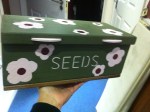
I really need to go check the inside of my seedboxes.
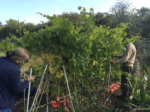
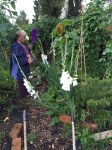
The grapevines had keeled over. With the heavy clay being so dry with the lack of rain, the makeshift frame supporting them had fallen. Much panic ensued-I had only gone to harvest raspberries-to right the frame and wedge it back into the dirt.
However, it was necessary to call Dad in, and see if he could engineer something more robust. In fact one side, is still a bit lop sided and another review is required. The frame as it is, was built when the vines were planted, very new and wiry. However, they have seen grown, trailed and true to their name; vined.
There is an abundance of leaves, and a few bunches of grapes that the boskoop glory and madeline sylvaner have produced as you can see from the picture above. Not enough this year, for a homebrew experiment. The crop is rather sweet, and the varieties are in fact dessert grapes.

































 horticultural 'obbit